
IKEA vs Howdens vs DIY Kitchens: Which Should You Choose?
IKEA, Howdens or DIY Kitchens? A Glasgow kitchen fitter compares how you buy them, flat-pack vs rigid, guarantees, fitting time and fitting cost.
Rigid units arrive ready-built, so they're quicker to fit and glued and dowelled in a factory. Flat-pack units arrive in boxes, so they're often cheaper, easier to get up a tenement stair and easy to adapt round pipes. A well-made flat-pack unit, assembled carefully and fitted well, can last as long as a rigid one. With us, flat-pack assembly adds £25 a cabinet.
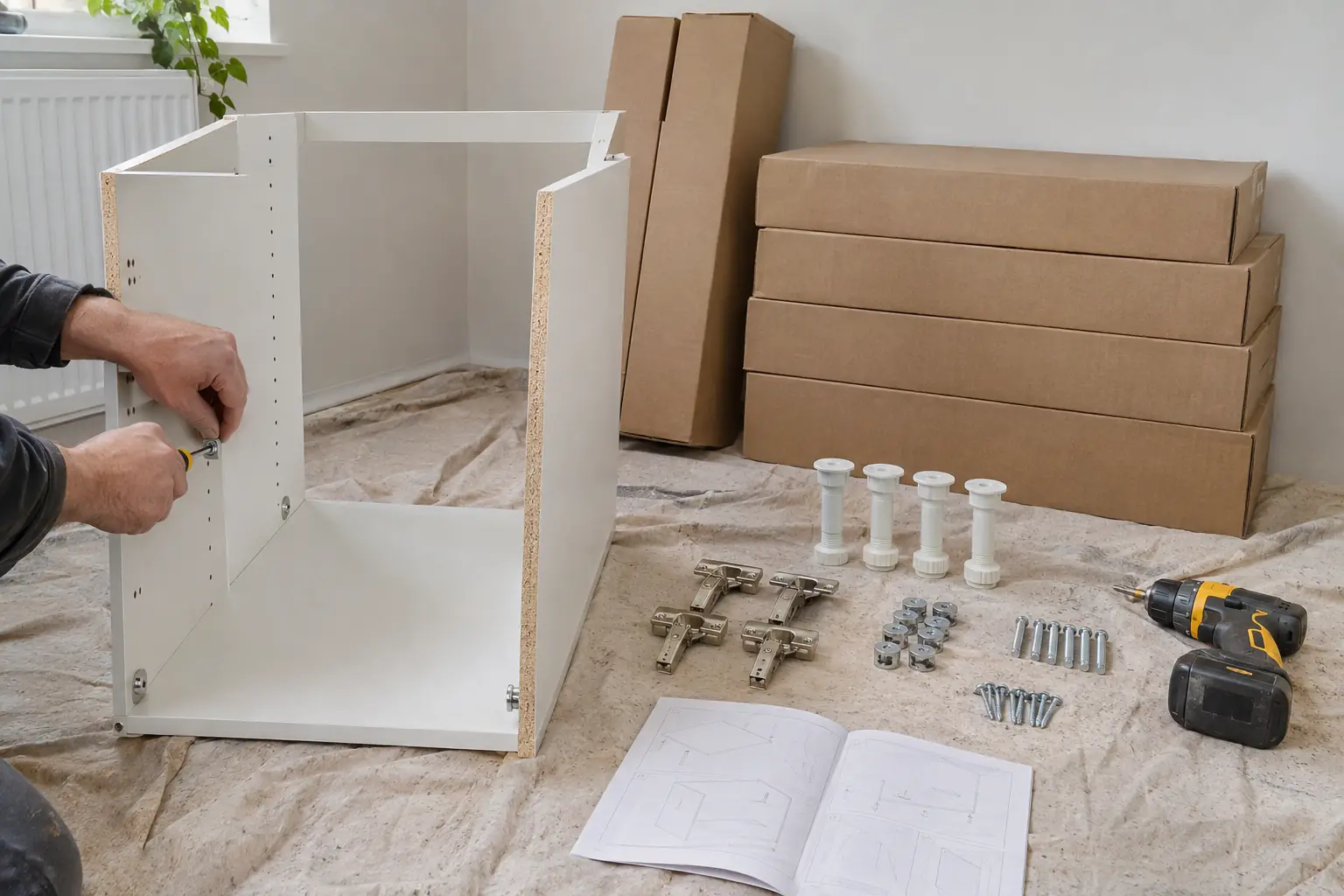
The difference is who builds the cabinet. Flat-pack units arrive as panels in a box, and the cabinet is assembled in your home before it's fitted. Rigid units, also called pre-assembled or ready-built units, arrive with the carcass already built and usually glued and dowelled in a factory. Doors, drawers and worktops are fitted on site either way.
Rigid units are usually stiffer out of the box, because the carcass is glued and clamped in a factory, but a good flat-pack unit isn't weak. Strength depends on more than the format:
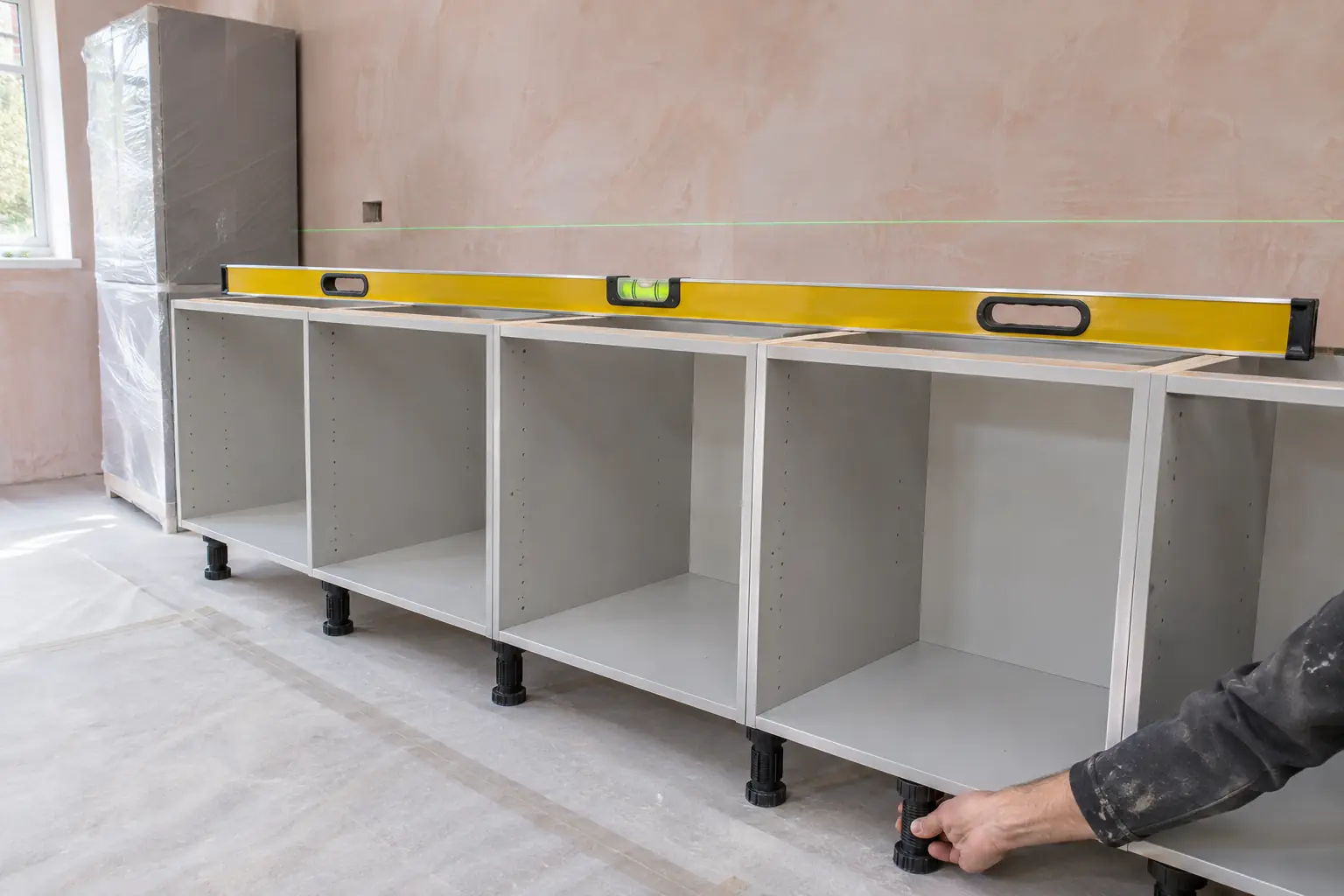
Once a kitchen is fitted, the units are fixed to each other, to the wall and under the worktop, which makes both types far stronger than a single cabinet on its own.
A flat-pack kitchen costs more to fit because the units have to be built first. With us, assembly is £25 a cabinet, on top of the normal fitting price. This is how it works out on a typical kitchen:
| Kitchen | Fitting price with us | Flat-pack assembly | Total for fitting |
|---|---|---|---|
| 8 units | From £795 | £200 | From £995 |
| 12 units | £1,250 to £2,200 | £300 | £1,550 to £2,500 |
| 15 units | £1,250 to £2,200 | £375 | £1,625 to £2,575 |
All prices are from November 2026, with no VAT added. The extra assembly cost is often more than covered by a lower price for the kitchen itself, so compare the total, not just one part.
Rigid units are quicker, because there's nothing to build on site. Most rigid kitchens of 9 to 15 units take us 3 to 5 days to fit. A flat-pack kitchen of the same size usually adds 1 to 2 days for assembly, depending on the number of units and how complex they are. Tall larders, corner units and drawer packs take the longest to build.
Flat-pack is often easier for a tenement, because boxes get round tight turns that a built cabinet can't. Rigid tall and corner units are the hardest to carry up a narrow stair, and they can't be taken apart if they don't fit.
Before you order rigid units, measure:
If one or two units won't make it, you don't have to switch the whole kitchen. Choosing a smaller size, or a flat-pack unit for that one position, often solves it. Our how to measure your kitchen guide shows how to check the route in.
Construction varies by retailer, and some retailers sell both. This table is a general guide; always check the range you're buying.
| Retailer | Construction | Notes |
|---|---|---|
| IKEA | Flat-pack | Assembly needed for every cabinet |
| DIY Kitchens | Rigid | Sold direct to homeowners, delivered built |
| Howdens | Rigid | Sold to trade, so your fitter orders it |
| Magnet | Mostly rigid | Many ranges are factory-assembled |
| Wickes | Both | Some ranges are flat-pack, some ready-built |
| B&Q | Varies by range | Check whether the range is flat-pack or rigid |
| Wren | Varies by range | Check with the showroom |
We fit all of them. Our IKEA vs Howdens vs DIY Kitchens guide compares three of the most popular in more detail.
Flat-pack units are often easier to adapt, because the panels can be notched or cut before the cabinet is built. Rigid units can be adapted too, but cutting a built carcass round a pipe or a gas meter takes more care. Either way, a good fitter will notch backs and shelves for pipes, cut round boxing and seal any cut edges, so the unit stays strong and moisture can't get in.
Choose rigid if you want the quickest fit and your access is easy. Choose flat-pack if your budget is tight, your access is awkward, or you've found a flat-pack range you love. Both can look excellent and last for years when they're fitted properly. We fit both, and we'll tell you at the survey if anything about your home makes one a better choice.
Book a free survey and we'll check your access, measure the room and give you a fixed price for fitting either type.
Yes, a good flat-pack kitchen can be excellent. Ranges such as IKEA's come with long guarantees, and many people choose them for their design and price. The quality depends on the materials, the hinges and drawer runners, and above all on careful assembly and fitting. A flat-pack kitchen built square and fixed properly looks and works like any other. We assemble and fit flat-pack kitchens across Glasgow.
It depends on the number and type of units, but assembly usually adds 1 to 2 days to a typical kitchen of 9 to 15 units. Simple base units are quick, while tall larders, corner units and drawer packs take longest. We build every cabinet on site before fitting, at £25 a cabinet, so the assembly is done to the same standard as the fit.
Yes. Most kitchen fitters assemble flat-pack units, though some charge for it separately and some don't mention it in the quote. We assemble every flat-pack cabinet ourselves, at £25 each, with no VAT added. Check whether assembly is included on any quote you get, because it can add a few hundred pounds to the fitting price. Assembly is done on site, just before each unit is fitted.
They're worth it if you value a quicker fit and your access is easy, because you avoid the assembly cost and a day or two on site. They're less worth it if the units can't get up your stair, or if the range you love is only sold flat-pack. Compare the total cost of the kitchen plus fitting, not the unit price alone.
Most base and wall units do, but tall larders, tall housings and corner units are the ones to check. Measure the close entrance, every turn of the stair and your hall. If one unit won't fit, choose a smaller size or a flat-pack unit for that position. We measure the stair at every survey before you order. Allow for the packaging, which adds to each unit's size.
You can, but it works best within one retailer, so the doors, colours and sizes match. Mixing brands can leave small differences in door finish, carcass colour or height. If access is the problem, a better solution is often a smaller rigid unit, or that retailer's own flat-pack version of the same unit, so everything still matches. We'll check the sizes and finishes with you before you order.
IKEA kitchens are flat-pack. Every cabinet arrives in boxes and needs to be assembled before it's fitted. That makes IKEA kitchens easy to carry into any home, including top-floor tenement flats. With us, IKEA assembly costs £25 a cabinet, and our IKEA kitchen fitting page explains how we build and fit them. That's £300 for a typical 12-unit kitchen, on top of the fitting price.
Yes. Howdens and DIY Kitchens both supply rigid, ready-built units, so there's no assembly on site and fitting is quicker. Howdens sells only to trade customers, so your fitter orders the kitchen. DIY Kitchens sells direct to homeowners. Because both are rigid, check your stair and doorways before ordering tall and corner units. With us, fitting either starts at £795 for up to 8 units, with no VAT added.
Checked 11 November 2026. Retailers change ranges, so always check the range you're buying.
Related: IKEA vs Howdens vs DIY Kitchens, How to measure your kitchen and DIY Kitchens fitting in Glasgow.
Keep planning with these, or see every kitchen fitting guide.
IKEA, Howdens or DIY Kitchens? A Glasgow kitchen fitter compares how you buy them, flat-pack vs rigid, guarantees, fitting time and fitting cost.
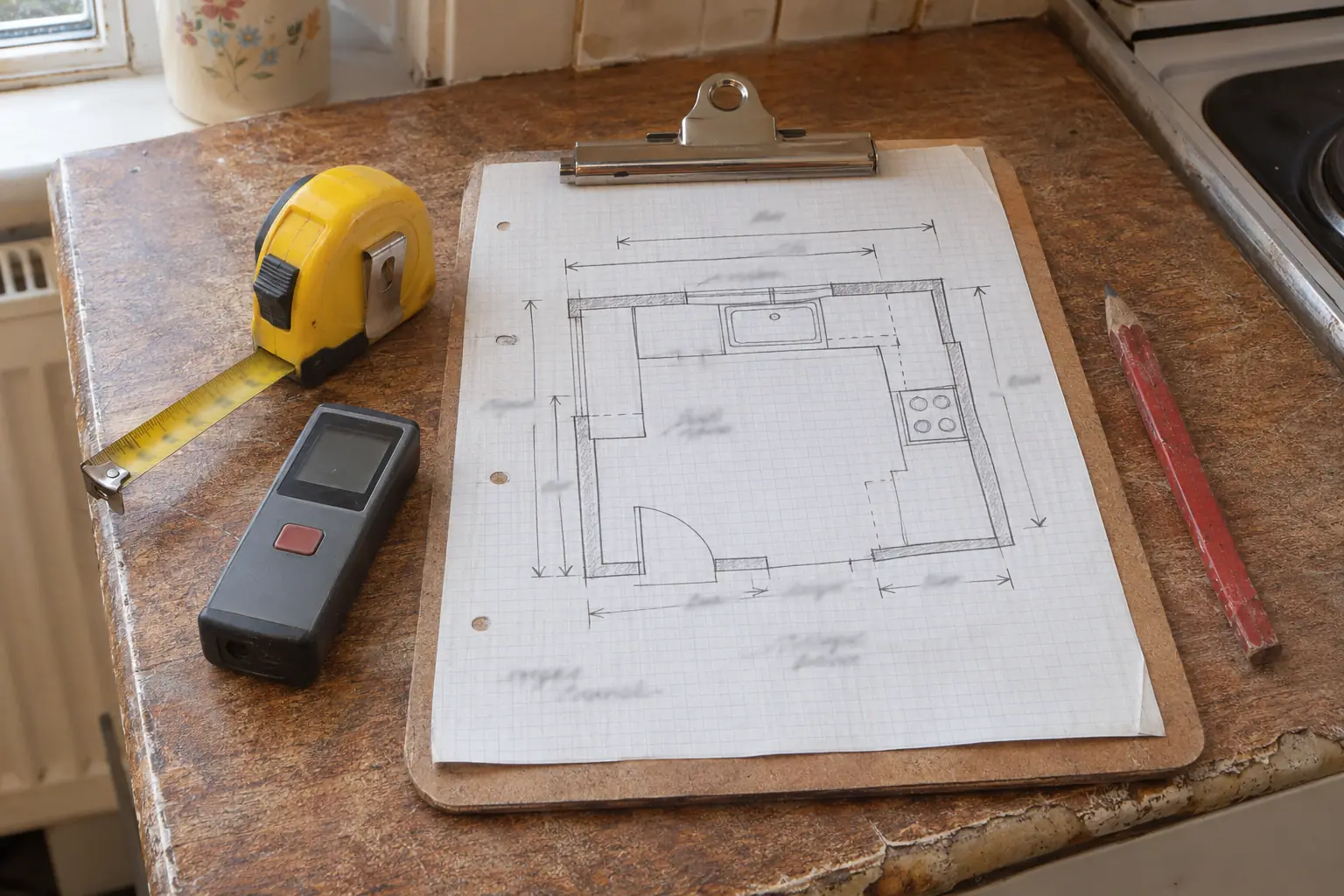
Measure your kitchen properly before you order: tools, a step-by-step method, what to record, and the mistakes that cause missing panels and wrong units.
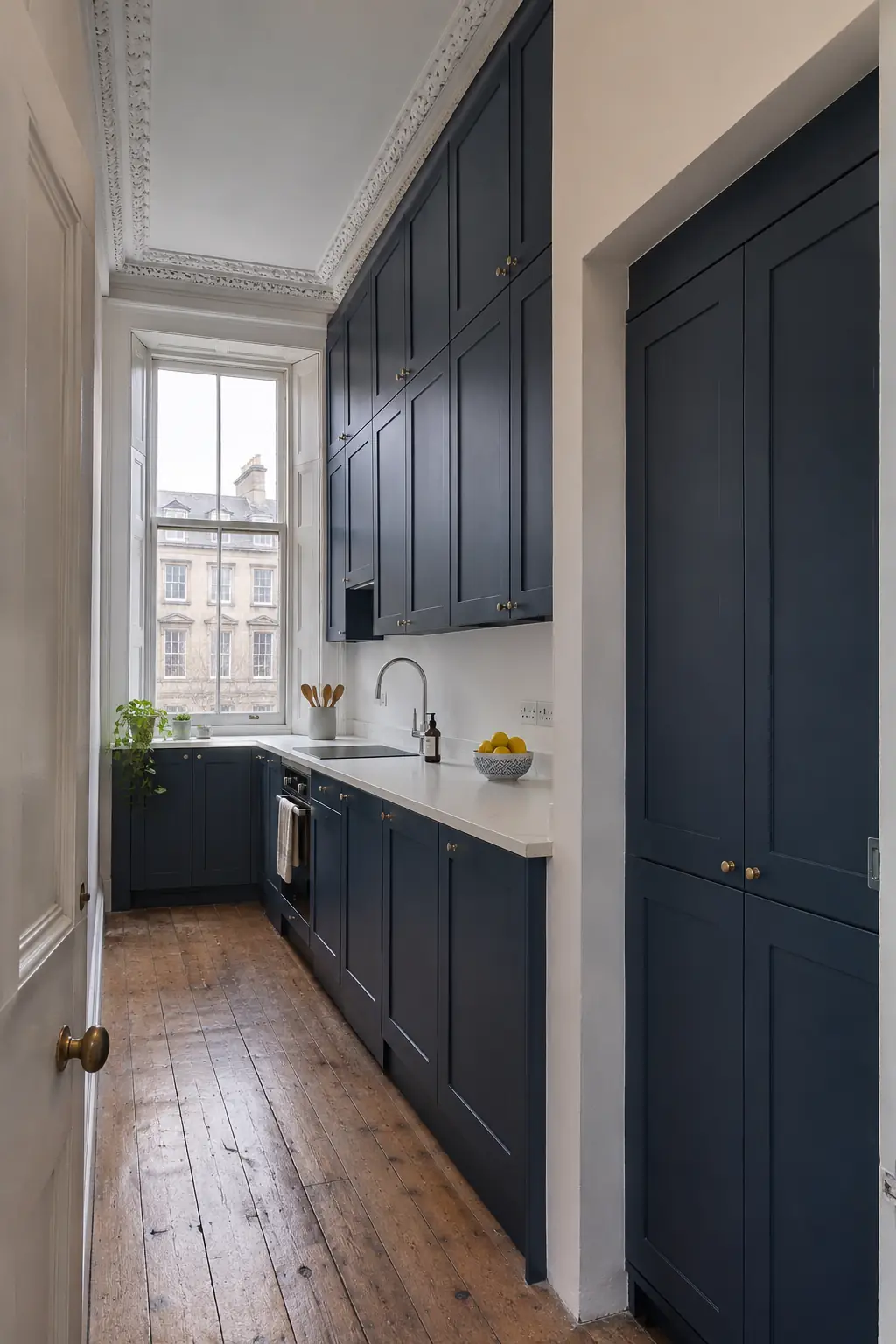
Tenement kitchen ideas from a Glasgow fitter: using the height, the bed recess, galley layouts, original features, opening up and the checks to make first.